


News From the Festival
Festival to Unveil Lady Macbeth Statue
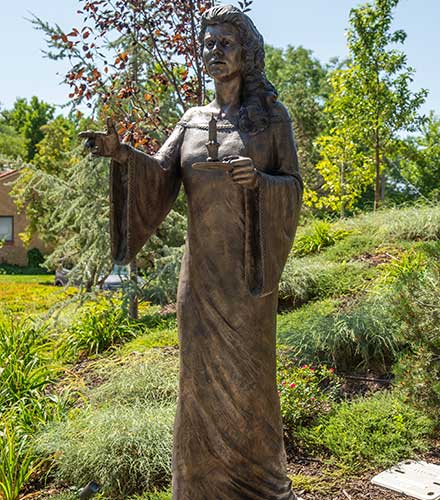
A life-size statue of Lady Macbeth will soon join eight other Shakespearean characters at the Utah Shakespeare Festival. The latest installment in the Pedersen Shakespeare Character Garden will be unveiled August 21 at 11:30 a.m. The garden is located between the Randall L. Jones and the Engelstad Shakespeare Theatres on the Festival grounds.
The statue was made possible by contributions from State Bank of Southern Utah (SBSU), and it was sculpted by Stanley J. Watts.
The public is invited to the short program which will include a welcome by Executive Producer Frank Mack, as well as remarks from Festival Founder Fred C. Adams and SBSU President and CEO Eric Schmutz. Special presentations will be made by Adams and Donn Jersey, Festival development director. Officials from SBSU will perform the unveiling.
The beautiful bronze statue captures Lady Macbeth holding a candle and wandering the corridors of the castle, stricken by her role in the murder of King Duncan. A plaque at the base of the statue quotes a gentlewoman who sees the forlorn lady wracked with guilt: “Lo you, here she comes! This is her very guise.”
Other statues in the character garden include William Shakespeare, Juliet, Sir John Falstaff, King Lear, Hamlet, Henry V, Cleopatra, and Titania (located at the west entrance to the Randall Theatre).
Desire the Spleen: Bringing out the Humors in Falstaff

John Ahlin backstage about to make his first entry of the evening as Sir John Falstaff in The Merry Wives of Windsor.
By John Ahlin
This is the second in a series of blog posts written by the actor play Sir John Falstaff in this season’s The Merry Wives of Windsor.
Before nervously charging “over the top,” English World War I soldiers would often recite Henry V’s “Once more unto the breach” speech quietly to themselves. Likewise before entering a funny scene, a jittery actor will sometimes mutter the old quote “dying is easy . . . comedy is hard!”
Oddly, it wasn’t some great comedian or clown who expressed that sentiment, but distinguished English actor Edmund Gwenn. Famous for portraying Kris Kringle in the classic (but not quite laugh-riot) Miracle on 34th Street, Gwenn, on his death bed, reportedly suggested playing comedy is more difficult than shuffling off this mortal coil, and then died.
Being funny on demand is like trying to get the hiccups on purpose—difficult. So imagine the butterflies an actor feels, about to enter as Falstaff, knowing the knowledgeable Utah Shakespeare Festival audience is sitting there thinking “Oh boy, here comes the funniest character in all Shakespeare.” And worse, a knowledgeable actor knows that Falstaff’s first scenes in both Henry IV Part One and The Merry Wives of Windsor are not particularly funny. (Falstaff’s first scene in Henry IV Part Two, however, is hilarious.)
Backstage before a comedy, some actors will want to draw up both knees and go fetal, but to me the trick is to grab those knees, yell “Cannonball!” and jump right in. Be fearless. Here are a few other quick tricks I use to get to Falstaff’s funny:
Go big, but go real. I was trained in the Method and in the Catskills. Borscht Belt comedy is famously big, like Falstaff, but the last step in technically building a larger-than-life, loud, humorous character is, ironically, the first lesson in Method acting: truth. I explore, find, and play the realities of Falstaff—not comedy of comment or clowning, but comedy of behavior.
Cough up a hairball. That first laugh is vital, so I construct a small (but truthful) moment early on to tell the audience it is okay to laugh. For example, as a just-awakened Falstaff in Henry IV Part One begins his groggy, arcane banter with Hal, I’ll comically cough up some reminder of the previous evening’s drunken carousing. This familiar “wait, what happened last night?” reality hopefully elicits a laugh while also detailing who Falstaff is, and where he is, in life.
Ask for the tea. Lunt and Fontanne, the famous American acting couple had simple advice: “Don’t ask for the laugh, ask for the tea.” In other words: trust the material. Once at a Twelfth Night talkback for students, I was describing how Shakespeare would often put humor in sad scenes. I told them a very funny Gravedigger was found in Ophelia’s grave, and a whole row of high school girls shrieked in unison. Then one cried out, “She dies?!” It turns out they were reading Hamlet in class and hadn’t got to that part.
I must remember to trust Shakespeare. He’s on my side. It’s natural to forget how comical The Merry Wives of Windsor is after many rehearsals, but its twists, turns, and surprises will be fresh, alive and humorous for the audiences seeing it anew. It hasn’t lasted 421 years as one of Shakespeare’s funniest comedies by accident.
The Liar: A Summary in Verse
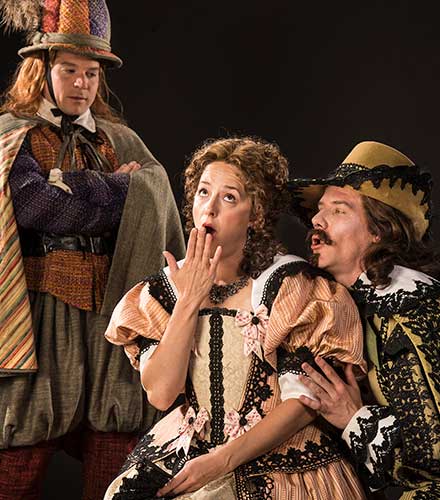
Brandon Burk (left) as Cliton, Betsy Mugavero as Clarice, and Jeb Burris as Dorante in The Liar.
### By Kathryn Neves
Editor’s Note: Kathryn Neves has been writing blog posts and news releases for the Festival for several months now, and decided with this assignment to stretch her creative wings a bit. Her clever synopsis of The Liar, is written in rhymed verse, the same style as David Ives’s translation of the play being presented at the Festival.
Twins, disguise, and maidens who conspire
Are all a part of this season’s The Liar!
Now, all these shenanigans might make you dizzy;
So let this rhymed synopsis keep you busy.
We open with Dorante— a lying jerk,
And Cliton who just can’t make lying work.
When sly Dorante first meets the cute Clarice,
He thinks that she’s her BFF, Lucrece!
And Cliton falls in love with Isabelle—
Not knowing that she has a “twin from hell.”
Meanwhile, Dorante’s old dad comes into town
To get his son to wed and settle down.
He makes a deal with afore-mentioned Clarice
(Or, as Dorante might know her, sweet Lucrece.)
“No, don’t!” Says Dorante, thinking on the spot;
“I have a wife! And I love her a lot!”
The ladies have been watching this whole spiel.
They’ll meet Dorante. They’ll find out his weird deal.
But just in case, they’ll do a switcheroo.
It’s now “Lucrece” Dorante will come to woo!
Now Dorante courts “Lucrece” and not “Clarice,”
While Clarice acts as Lucrece’s mouthpiece.
And if you think it’s real confusing now,
Just wait. Dorante gets in a real row:
A fight with Clarice’s fiancé, Alcippe.
And now the real Lucrece loves Dorante. Eep!
Will dad find out that Dorante lied?
Will Dorante ever find a bride?
Will identities be unswapped?
Can this comedy be topped?
The Utah Shakespeare Fest has all of this!
Come and see. It’s not a play to miss.
Words Cubed New Plays Scheduled
The Utah Shakespeare Festival’s Words Cubed program for new plays is set to introduce audiences to two very different plays this season: Gertrude and Claudius, a prequel to Hamlet, will play August 24, 25, and 30 and September 1. Shakespeare’s Worst! A Play on a Play, a hilarious retelling of The Two Gentlemen of Verona, will be performed August 29 and 31.
“Being part of the birth of a new play is an exciting experience, and Words Cubed offers Festival audiences an opportunity to witness and participate in these amazing, original creations. The two plays under development this summer are fantastic, but in very different ways,” said Frank Mack, Festival executive producer. “Mark St. Germain’s new adaptation of John Updike’s novel, Gertrude and Claudius, is an innovative theatrical invention that will appeal to Hamlet fans, and anyone who likes great stories. Shakespeare’s Worst, by Simpsons writer/producer Mike Reiss is full of hilarious jokes, and getting to see and respond to the invention of comedy this good is a rare opportunity for Festival audiences.”
Gertrude and Claudius is adapted by Mark St. Germain from the novel by John Updike, one of only three people to be awarded the Pulitzer Prize for Fiction twice. It will be directed by Jim Helsinger, artistic director of the Orlando Shakespeare Festival. Gertrude and Claudius brings a new point of view to Hamlet, Shakespeare’s classic tale of guilt and revenge. The infamous couple serve as the villains in Shakespeare’s work, but this is a story of good intentions gone wrong. With ominous hints at the familiar story to come, this play shakes up what you thought you knew about Elsinore and the conflicted young prince.
Shakespeare’s Worst! A Play on a Play is written by Mike Reiss with Nick Newlin. Reiss is a writer for the animated television series The Simpsons. It will be directed by popular Festival actor Quinn Mattfeld. This hilarious and irreverent play features a small town theatre company performing The Two Gentlemen of Verona. But one of the cast members is very unhappy: his career is going nowhere, he’s tired of the show, and he wants out—now.
The staged readings of these plays will be in the Eileen and Allen Anes Studio Theatre at 9:30 each day, followed by discussions between the playwright, actors, and audience members. Tickets are $10 at the Ticket Office online at bard.org or over the telephone at 800-PLAYTIX.
Words Cubed is designed to nurture the new work of nationally-recognized playwrights and allow them to workshop their plays in front of an audience and then receive feedback from the actors and audience.
Tickets are now on sale for all Festival plays: Words Cubed readings of Gertrude and Claudius and Shakespeare’s Worst! A Play on a Play, as well as regular season full productions of The Merry Wives of Windsor, Henry VI Part One, The Merchant of Venice, Othello, The Foreigner, Big River, An Iliad, and The Liar. For more information and tickets visit www.bard.org or call 1-800-PLAYTIX.
The Big Sir: Thoughts on Falstaff and the Festival
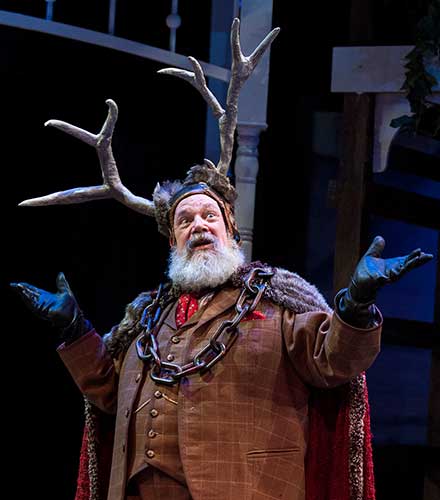
John Ahlin as Sir John Falstaff
By John Ahlin
Over the next few weeks I will be writing blog posts about the joy of acting at the Festival and the honor of playing big Sir John Falstaff. Here is the first:
Very near the end of the last Harry Potter movie the screen goes black, and the words “Nineteen Years Later” appear just before we see Harry, Hermione, and Ron greatly changed, yet the same. This little blog post could begin with a black screen that says “Three Years Later.”
I was last in Cedar City in 2015 and had the very high honor of appearing in the very last Utah Shakespeare Festival play performed in the Adams Shakespearean Theatre. It was a night to remember. After portraying Sir John Falstaff in the final heart-wrenching moments of Henry IV Part Two, we had an emotional ceremony onstage, summoning the spirits and echoes of all the Shakespeare plays performed in that magnificent Wooden O. Then audience and actors together solemnly walked in the dark one block over to what can be only described as an indescribable mass of incomplete concrete, amidst a confusion of construction materials. Simple words of hope and pledges of continuing were expressed, and at the perfect moment a beacon was illuminated, shining brilliantly into the heavens. Well here I am, three years later, in The Merry Wives of Windsor, again playing Falstaff (and if physics is correct, that beacon is three light years away, on its way to infinity).
You can imagine, as a returning guest artist, what a thrill it is to see the magnificent Engelstad Shakespeare Theatre up and running and the gorgeous Utah Shakespeare Festival campus alive and bustling. And like Ron and Hermione and Harry, while everything is different, the spirit, the desire, the fire—the magic—which is the Festival’s true essence is the same. It remains alive, growing, vital and masterful. Simply put: new location, same inspiration.
I can happily report that I love performing on the Engelstad Theatre stage. The audience, which to me sets the Festival apart, is right there, laughing, cheering, and so easy to connect with. I see their faces, as the Sir John Falstaff depicted in Merry Wives often speaks to them directly.
While some scholars insist that this Falstaff doesn’t hold a candle to the great Falstaff of the Henry plays, as the actor charged with breathing life into one of literature’s giants, I can tell you—it’s the same guy. He still has the acumen, wit, and weariness of the world’s ironies with which Falstaff of the Henriad is blessed/cursed. He still has a blind spot to duplicity, never imagining Hal would ever shun him, and likewise, when Mistress Ford apparently responds affectionately, he genuinely believes she has genuine love for him. The possibly true legend has it that Queen Elizabeth wanted to see Falstaff in love, and Shakespeare obliges. While Falstaff’s desperation for money is the spark, love is the flame that fuels and ultimately scorches him.
Wooden O Brings Scholars to Festival


Scholars from across the United States and beyond will be gathering in Cedar City August 6–8 to discuss “The Other in Shakespeare.” Now in its seventeenth year, the Wooden O Symposium, sponsored by the Utah Shakespeare Festival, the Southern Utah University College of Performing and Visual Arts, and the Gerald R. Sherratt Library, is a cross-disciplinary conference exploring Medieval through Early Modern Studies through the text and performance of Shakespeare’s plays.
The conference will feature two plenary speakers:
Madeline Sayet
Ma****deline Sayet will speak August 6 on “Shakespeare and the Invitation.” She is a director of new plays, classics, and opera and was named to Forbes magazine’s 2018 “30 under 30 List” in the Hollywood and entertainment area. She has also been honored as a TED Fellow, an MIT Media Lab Director’s Fellow, and a National Directing Fellow and is a recipient of the White House Champion of Change Award. Raised on a combination of traditional Mohegan stories and Shakespeare, she was the Resident Director at Amerinda (American Indian Artists) Inc. in New York City from 2013 to 2016 where she developed new plays by Native playwrights and launched the Native American Shakespeare Ensemble.
Edna Nahshon
Edna Nahshon is Professor of Jewish Theater and Drama at the Jewish Theological Seminary, New York and Senior Associate at Oxford University’s Center for Hebrew and Jewish Studies. Her specialty is the intersection of Jewishness, theatre, and performance, a topic on which she has written extensively. In 2016 she curated a major exhibition titled “New York’s Yiddish Theater: From the Bower to Broadway” at the Museum of the City of New York and prepared the exhibition’s extensive companion book which received the 2016 George Freedley Award Special Jury Prize for an exemplary work in the field of live theatre or performance. Her most recent book (with Michael Shapiro) is Wrestling with Shylock: Jewish Responses to The Merchant of Venice (Cambridge University Press, 2017).
Presenters reading their papers will cover a host of topics, including “The Case of Morocco: Failed Immigration in The Merchant of Venice” by Stephanie Chamberlain, Southeast Missouri State University; “Gender Gymnastics: Joan of Arc, Queen Margaret, and ‘Othering’ in the three parts of Henry VI” by Brian Carroll, Berry College; “‘Be a Man’: Othello, Criticism, Race, and Hegemonic Masculinity” by Kelsey Ridge, University of Birmingham, United Kingdom; “A Stranger to His State: Prospero’s Isolation through Art” by Sarah J. L. Chambers, University of Central Oklahoma; and many others.
After the symposium, selected articles will be published in The Journal of the Wooden O. The journal is published annually by Southern Utah University Press in cooperation with the SUU Center for Shakespeare Studies and the Festival.
For more information, visit the website at bard.org/wooden-o-symposium or call 435-865-8333.
The Iliad: Fact or Splendid Fiction?
By Kathryn Neves
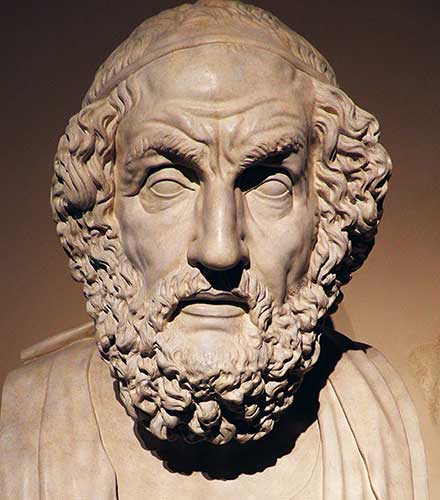
Almost everyone knows the basic story: the beautiful Helen, Paris of Troy, strong Achilles, and noble Hector. We all know about the River Styx and the thousand ships and the Trojan Horse. But at the center of all this splendid storytelling is one question: did the Trojan War really happen? After all, for centuries people have called it nothing more than a myth—a story told to teach children the perils of war and greed and the all-consuming power of the gods. Did it happen, or was it only a story? There’s no way Homer’s poem is true, is there? Is there any fact at all to The Iliad?
Until the 1860s, the world was certain the story was only a myth—that is, until the work of Heinrich Schliemann, a German archaeologist with a passion for Greek mythology. Digging at the modern-day city of Hisarlik, Turkey, Schliemann made an amazing discovery. Hisarlik is not one city, but nine; all built on top of one another (Stefan Lovgren, “Is Troy True? The Evidence Behind Movie Myth,” National Geographic, May 14, 2004). The whole site was a treasure trove of history just waiting to be discovered. Though most of these ancient cities didn’t seem to have anything to do with Homer’s masterful poem, two did: the sixth and seventh oldest layers, now usually called Troy VI and Troy VII.
Troy VI certainly matched Homer’s description. Schliemann found evidence of fabulous wealth, strong architecture, and a fairly large population. It was full of temples and tributes to the gods and all sorts of other Homeric-looking artifacts. So there it is, right? Question closed? We found Troy? Well, no. There was one thing wrong with this city; it wasn’t destroyed by war. It was destroyed by an earthquake! There were no glorious battles between Hector and Achilles, but instead between tectonic plates. On the other hand, some argue that Homer’s text does point to an earthquake. The Trojan Horse could be a metaphor for Poseidon: he was associated with horses, after all, and he was the god of the seas and of earthquakes. Perhaps The Iliad’s end battle was all just a symbol of the natural forces of the earth (Lovgren).
Then again, there’s more evidence to be considered: Troy VII. To be fair, it did not really match Homer’s description. It wasn’t as big and wasn’t as wealthy. But the ancient ruins fit the time frame for the Trojan War; and, most importantly, it was destroyed in battle. Archaeologists have uncovered arrowheads, slings, battle-fallen corpses, and other evidence of warfare. It’s possible, then, that Homer combined the two cities, both VI and VII, into one: it makes a better story that way, after all.
Still, with some evidence on the war’s side, there’s a lot we know didn’t happen. First and foremost, Helen: it’s very unlikely that any conflict was started over her kidnapping. Now, that doesn’t make it impossible. There’s historical precedent for wars beings started over an insult to a king. But there just isn’t any evidence to prove this point (Lovgren). And the other characters are probably completely fictional as well. Achilles, Hector, Paris, and the rest are probably completely myth. Not to mention the supernatural elements like Zeus and the Underworld and Hades, all just traditions of ancient Greek religion.
And then there’s other theories as to how Troy VII was destroyed; it’s very possible that it was defeated by the “sea people,” who were from what is now Italy. We know they passed through at the right time, according to ancient Egyptian records. And we know they ransacked every city they passed through. So there are other explanations for the battle-torn Troy VII. It might not have been the Greeks at all.
All in all, we don’t really know what happened between the Trojans and the Achaeans—if anything. All the evidence is so time-worn and flimsy that we’ll probably never know the full story. Maybe The Iliad is fiction, maybe it’s fact, or maybe it’s some combination of both. But it doesn’t really matter. Homer’s The Iliad, and this season’s play An Iliad, capture the human condition; through it we see the agonies of war and the benefits of bravery and nobility. Even if every word of it is fiction, the characters and their struggles still ring true.
The Festival production of An Iliad
Who Were Achilles and Hector?
By Kathryn Neves
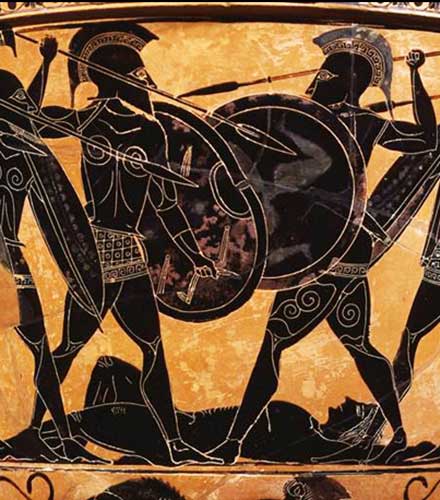
This season’s An Iliad is full of amazing stories, themes, poetry, and settings. But more than anything, this play is full of amazing characters. Even though every character is portrayed by one man, The Poet (played by Brian Vaughn), each of Homer’s original warriors and soldiers and kings come to life in a way that you don’t see too often. Two characters, especially, drive the heart of the story: Trojan Hector, and Greek Achilles. Though these characters are nemeses, and even though they seem to hate each other, they have more in common than they have differences.
Achilles, according to legend, was half-immortal: his mother, a sea-nymph, dipped him into the River Styx when he was only a baby. This meant he was completely indestructible— all except for his heel, which his mother used to hold him when she dipped him into the water. According to The Poet, he is the greatest warrior that ever lived: “bigger than Heracles, bigger than Sinbad, bigger than . . . well, who’s the greatest warrior living now?” His life is surrounded by the supernatural; he was raised by a centaur, he can speak to animals, and it’s been prophesied that he’ll die in Troy. More important than all this, though, is Achilles’ character; he is extremely prideful, vengeful, and quick to anger.
Hector, on the other hand, was all mortal. He was the son of Priam, the king of Troy. It was his brother, Paris, that kidnapped Helen and started off the entire war. And just like Achilles, Hector is very prideful. He refuses to retreat, he refuses to let anyone else lead the battles against the Greeks, and he refuses, most of all, to surrender to the other side. Even when his wife and child beg him to call off the fighting, he won’t do it. He would rather die in the glory of battle than live with defeat.
Achilles, in his pride, refuses to fight against the Trojans; he’s been offended by the Greek leader, so he lets the army suffer and falter in order to prove a point. Hector, on the other hand, fights wholeheartedly; he wants to defend his country and his family, so he gives the battle his all. But he’s not only fighting to defend his country; he’s fighting for the glory of it. “He won’t let anyone else lead the charge for Troy. . . . He wants to be in charge. Complicated. Full of hubris.” He’s the one who eventually ends up killing Achilles’ best friend, Patroclus. And it’s only Patroclus’ death that finally spurs Achilles to fight.
Hector wants to battle Achilles to avenge his country and defend it against future Greek attacks. In An Iliad, he considers reasoning with Achilles, but his pride overcomes him. Similarly, instead of letting bygones be bygones, Achilles swears vengeance on Hector and goes after him and his armies. It’s their fight to the death that sits at the heart of the play.
What makes these characters so similar? In a word, it’s their pride. Neither one is willing to lose or to concede anything, even if it is for a greater good. Instead, each character lets his pride fuel his rage and his desire for vengeance. Each has a passionate love for and loyalty toward others; Hector cares for his wife and son more than anything. In An Iliad, we see his tenderness and love as he speaks with his baby son, and we see his worry for his wife. Likewise, Achilles has an intense attachment to two characters: his lover Briseis and his best friend Patroclus. We learn in the play that “Patroclus and Achilles were more than friends, they were brothers. And really they were more than brothers, they loved each other.”
We learn that both Achilles and Hector are good men. They are driven by courage and nobility; they want only to defend and avenge their loved ones. Each of them is their respective side’s best warrior. It’s no wonder that Homer wrote so much about them. But ultimately, it’s their pride and anger that destroys them. An Iliad shows us that each character lets his pride overcome everything he loves until there’s nothing left but rage and war.
Even though they seem very different when you first look at them, Hector and Achilles are very alike; they are men who want what is best for themselves and for their loved ones. Come see An Iliad this season; you’ll see the beauty of love and loyalty and the dangers of pride and anger. And most of all, you’ll see a beautiful, but sad, tale portrayed in exquisite language and masterful storytelling.
Announcing the 2019 Season

VIEW AND PRINT THE 2019 SEASON CALENDAR
The Utah Shakespeare Festival recently announced its fifty-eighth annual season. Themed around family and “The Ties that Bind,” the Festival’s 2019 season will feature eight (or depending how you count, nine) plays from June 27 to October 12, 2019. In an effort to make it easy for loyal Festival guests to order their tickets well in advance, tickets are now on sale.
Families of many kinds will be featured in the diverse line-up, from dark and dysfunctional to hopeful and full of great joy. For more information or to order tickets after July 6, visit www.bard.or or call the Ticket Office at 1-800-PLAYTIX.
“The 2019 season is rich with life-affirming classical and contemporary plays, each celebrating the preservation of life and the value of our loved ones,” said Brian Vaughn, artistic director. “Five classics by the Bard (two played out in one epic viewing), a new play celebrating the work of William Shakespeare, a heartwarming tour-de-force, an incredibly relevant powerhouse by one of America’s greatest playwrights, and the return of the most popular musical in Festival history will all come together for a season not to miss.”
The 2019 plays are:
Joseph and the Amazing Technicolor Dreamcoat
Lyrics by Tim Rice
Music by Andrew Lloyd Webber
It’s bright! It’s loud! It’s technicolor! It’s Joseph’s new coat! And it sets the tone for a frolicking Biblical satire filled with vaudevillian tunes, country and western swings, calypso, and good old rock and roll. This classic musical of Joseph and his brothers has been going strong for fifty years and guarantees to leave everyone in the family humming for days.
Macbeth
By William Shakespeare
Haunted by the witches’ prophecies and spurred by his wife’s ambitions (as well as his own taste for power), Macbeth dares to tempt fate. But in this, one of the world’s first psychological thrillers, he slowly finds that his murderous machinations are doomed to bitter and tragic failure.
Hamlet
By William Shakespeare
Prince Hamlet wants the truth—and retribution. Driven by his father’s ghost, his mother’s hasty remarriage, and the corrupt society all around him, he plots and withdraws, schemes and retreats. Written at the height of Shakespeare’s career, this powerful examination of the human psyche is the Bard’s most mature and chilling revenge tragedy.
The Book of Will
By Lauren Gunderson
Without William Shakespeare, we wouldn’t have the world’s most memorable plays—and without his friends, we wouldn’t know he wrote them. After the Bard’s death, his fellow actors realize that the plays they love are being muddled and even lost; they know they need to publish a collection of his work. Thus, they launch a seemingly impossible mission to print “the book” of his plays and save his legacy.
The Conclusion of Henry VI, Parts Two and Three
By William Shakespeare
Pitting the Lancasters and the Yorks in a battle for the crown and the future of England, this story is at times both grim and heroic. The epic tale of kings and families at war will be concluded in one grand event spanning the War of the Roses in an epic and expanded experience. Don’t miss this once-in-a-lifetime theatrical event of the last two parts of Henry VI.
Twelfth Night
By William Shakespeare
Orsino loves Oliva (who won’t give him the time of day). Olivia loves Viola (whom she thinks is a boy). Viola loves Orsino (who doesn’t know she’s a girl). Malvolio loves being in love; and Sir Andrew, Toby Belch, and Maria love life to its fullest. It’s all rollicking confusion, but these hilarious characters do, at last, find love where they least expect it.
Every Brilliant Thing
By Duncan MacMillan
With Jonny Donahoe
Mom’s in the hospital. She’s “done something stupid.” So you start a list of everything that’s brilliant and worth living for. 1. Ice cream. 2. Water fights. 3. Staying up past your bedtime. You leave it on her pillow, hoping—and you add to the list throughout your life. This funny and moving play is a tribute to resilience and hope—as it enlists you to tell its heartfelt story.
The Price
By Arthur Miller
A powerful, riveting masterpiece by one of America’s greatest playwrights, The Price spirals around two brothers’ struggle to make peace with their past. Years after an angry breakup, Victor and Walter meet again after the death of their father. As they sort through his possessions, the memories evoked stir up old hostilities and bring the angst of years of unanswered questions back to the surface.
“The 2019 season is filled with shows that will connect with Festival audiences,” concluded Frank Mack, executive producer. “Starting with Joseph and the Amazing Technicolor Dreamcoat, including great Shakespearean masterworks such as Hamlet and Macbeth, and ranging to an American classic, The Price by Arthur Miller, 2019 will be a great season to drink in what the Festival does best.”
Festival Cancels 2018 Production of Pearl’s in the House
Cedar City, UT, June 22, 2018 — The Utah Shakespeare Festival has announced that it has cancelled the 2018 production of Pearl’s in the House.
Citing culturally insensitive communications issued by the guest director/creator of Pearl’s in the House regarding casting, the Utah Shakespeare Festival issued the following:
These communications, which were brought to our attention after the fact, were not in harmony with the values and mission of the Festival which includes a deep commitment to diversity and inclusion. The Festival regrets the harm this incident caused a potential member of our company and artists who were planning to work on the show, and any inconveniences it may cause our guests.
Executive Producer Frank Mack said, “Our 2018 season is thematically based on ideas of the adverse effects of intolerance in our culture. The offensive communications that led us to cancel this production are completely contrary to these values and the artistic objectives we are pursuing this season."
“It is an unfortunate set of circumstances for all the artists who have put so much work into the process, but our organizational culture and values take precedence always. This was an incredibly difficult decision because of the impact this would have on so many parties; however, continuing the production would not add to our mission and our values but would detract from them.” said Artistic Director Brian Vaughn.
As a result of this change, the Festival will be adding performances of An Iliad, which will take place in the Eileen and Allen Anes Studio Theater in selected slots that were previously designated for Pearl’s in the House. The Festival will be reaching out to guests who have already purchased tickets to Pearl’s in the House to help them with exchanges or refunds.
For more information on the 2018 season of The Utah Shakespeare Festival, please visit bard.org or call 1-800-PLAYTIX